Showing posts with label Education. Show all posts

Friday, 7 June 2019

Showtime! Resources for the director/stage manager

0


It's showtime! Preparing for a school show can be stressful, with so many moving parts and people to coordinate. So, here are some of the useful documents I've collected/created over the past few years teaching drama. If you are a new drama teacher or looking to refine your process, these may come in useful. Click on the title of each document to access a GoogleDrive link.

(Thanks to James Lehmann for many of these. Credit also to Ellie Bryce.)


Cast and Crew Call Sheet


A list of the possible roles and responsibilities for a show, with space to add contact details for quickly reaching people during rehearsals, etc.


Rehearsal Schedule


A quick setup for planning your rehearsal schedule. Quick tip: If you have a large cast, divide your script into parts (4 or 5 for example) to rehearse on different days so not everyone is required all the time. It makes it much easier than managing a large group. 

Scene Map by Character


See who is in which scene at a glance. Useful for the cast to see their trajectory through the piece, and for your Stage Manager to call cast to the stage during rehearsals. 

Properties List


List all the props and their locations, quantities, notes, etc. 

Sound Cues List


Sound cues list, with scene numbers, pages, and cue notes. 

Show Start-Up Procedure


This one would need adapting to your own theatre set-up, but it is a comprehensive look at what needs to happen in the run up to the show. A good starting point to build your own version at least!


Hopefully you find one or two of these useful. If you have other documents in this same vain, I'd love to see them!


Monday, 16 October 2017

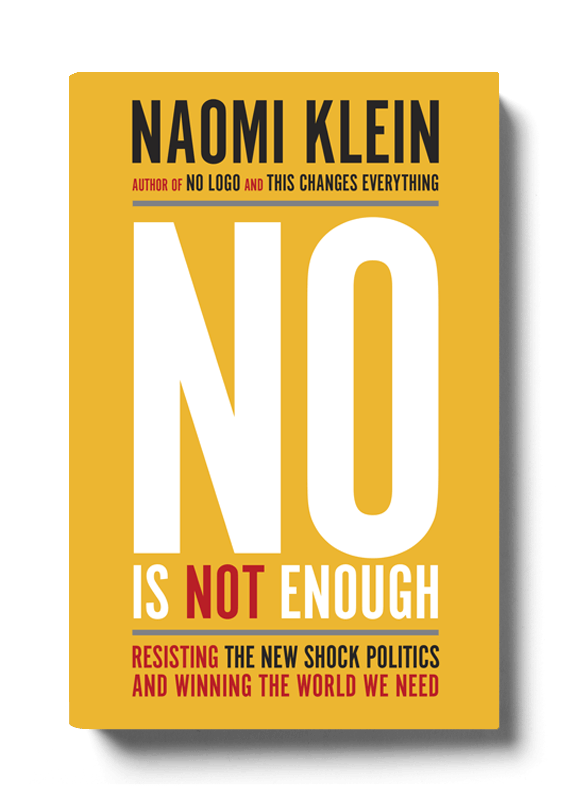
No Is Not Enough: Activism in the drama classroom

0


On my journey to school recently I've added some audiobooks to my playlists, in addition to the various podcasts I am already subscribed to (Radiolab, The Drama Teacher Podcast, Flash Forward, Under The Skin, to suggest a few). It's a great way to digest some content while otherwise doing basically nothing and I've been able to encounter some great new ideas this way.

The best thing I've listened to recently is an audiobook version of Naomi Klein's No Is Not Enough: Resisting Trump's Shock Politics and Winning The World We Need. In the book, Klein outlines some of the key factors that created social and political systems which Trump (and other global leaders) has been able to exploit while at the same time undermine so thoroughly. She then goes on to urge everyone who is currently fighting independently for any particular group's rights, or our planet's protection, to unite with a shared and common purpose.

“The crucial lesson of Brexit and of Trump’s victory, is that leaders who are seen as representing the failed neoliberal status quo are no match for the demagogues and neo-fascists. Only a bold and genuinely redistributive progressive agenda can offer real answers to inequality and the crises in democracy, while directing popular rage where it belongs: at those who have benefited so extravagantly from the auctioning off of public wealth; the polluting of land, air, and water; and the deregulation of the financial sphere.” 
― Naomi Klein, No Is Not Enough: Resisting Trump's Shock Politics and Winning the World We Need


This book, which ties into many of the same messages in the podcasts I have been listening to since Trump's election and Brexit, has given me much food for thought and I've been reflecting on what I can start doing in my classroom and, not forgetting, personal life.


It is imperative that our students understand the need for a "genuinely redistributive progressive agenda" and as privileged, well-educated, young citizens of the world they have the responsibility and opportunity to offer positive alternatives to the current systems of power and wealth. As a drama teacher, I have always believed in collaborative methods of making work, but now even more I think we need to move further away from hierarchical, top-down methods of creating art. Traditional author > director > actor > crew hierarchies can be problematic; we need to use more egalitarian collaborative strategies as models and testing grounds for how our students can practise embodying these ideas once they become young professionals, policy makers, leaders and visionaries in the future.

What are some of the ways this can look in practice? Directive-Response-Response, is a method of making art collectively, which provides an alternative to director-lead work. I believe it is also important to offer alternatives to the unidimensional narratives of most popular culture towards complex, multilayered, even potentially contradictory or confusing representations of real life. The most popular products of the West End, Broadway, Hollywood and television, though often compelling stories, many of which even with positive, progressive messages, do very little to incite real change in the world. Developing 'moment work' as Tectonic Theatre Project has been doing for many years, is a great way to build multi-layered work, which can encapsulate a much broader range of views and ideas.

"[...] Any opposition that is serious about taking on Trump, or other far-right forces like him around the world, must embrace the task of telling a new history of how we ended up here, in this perilous moment . A history that compellingly shows the role played by the politics of division and separation. Racial divisions. Class divisions. Gender divisions. Citizenship divisions. And a false division between humans and the natural world. Only then will it become possible to truly come together to win the world we need."
― Naomi Klein, No Is Not Enough: Resisting Trump's Shock Politics and Winning the World We Need

We should also think beyond the constraints of just making performance work though. I have been reflecting on the way students reflect and give feedback to each other during the creative process.
Liz Lerman's Critical Response Format is a detailed and structured way for artists to receive feedback, which I've used previously with success, but even something as simple as employing Think-Pair-Share in my classroom has increased overall collaboration and engagement.

Beyond this, I think the single biggest thing we can do in our classrooms is encourage students to use their imaginations. To imagine new worlds, new possibilities; ones vastly different from what currently exists.

"With unleashed white supremacy and misogyny, with the world teetering on the edge of ecological collapse, with the very last vestiges of the public sphere set to be devoured by capital, it's clear that we need to draw a line in the sand and say "no more." Yes, we need to do that and we need to chart a credible and inspiring path to a different future. And that future cannot simply be where we were before Trump came along (aka the world that gave us Trump). It has to be somewhere we've never been before."
― Naomi Klein, No Is Not Enough: Resisting Trump's Shock Politics and Winning the World We Need 

Or as Douglas Adams wrote, "Let us think the unthinkable, let us do the undoable, let us prepare to grapple with the ineffable itself, and see if we may not eff it after all."

The reimagining of classics with minor updates, the regurgitating of the same canon of playtexts, the 'tried and true' formulas of making theatre, these are no longer enough if we want to fix the most pressing problems of our world. What we need is something else, something new, a format beyond what is currently offered in the mainstream cinemas and theatres of the world. And who better to build this kind of theatre but our young people, still able to imagine and play, who's future is still very much ahead of them.


Friday, 13 October 2017

Accelerating up to the IB: London TAPS with ISTA

0

This past weekend, IB Theatre students from ISB took part in the Theatre Arts Programme Symposium (or TAPS for short) in central London, to help accelerate their learning and prepare them for the IB. A weekend more packed than the stalls at The National Theatre, the organisers of the event once again provided our students with an unforgettable experience.


We began our trip on Sunday by watching two shows which we hoped would energise the students and ignite their creative drives for the upcoming event. Starting out with Cirque Eloize's Saloon was exactly what we needed. Gun-slingin' acrobatics, hilariously silly sketches and imaginative technical elements for an hour and half, and things certainly kicked off for us.


Then we headed over to the Arts Theatre, curious to find out if The Toxic Avenger would be any good. A rock-opera based on a notoriously dodgy 1984 film of the same name, we really hoped it wouldn't be a (toxic) waste of time.


Lucky for all, it was a huge success. We laughed so hard, sang along to the songs and reveled in the fun that the indie playhouse had put together. To top it all off, while getting ready to leave, we were surprised by an opportunity to meet the actors as they came outside. They signed shirts, answered questions and made the whole evening even better.

So day one had been amazing and now everyone was super psyched as the festival started in earnest. TAPS is essential to the success of our IB Theatre programme at ISB. It offers students an immersive event, acting as a fantastic resource for further explorations of the course back in school. Engaging each and every participant with the philosophy of the programme, its core components and the required assessment tasks, students mix with other schools and work alongside professional artists and directors on creative tasks and exercises. It provides our students with the tools and strategies required for managing their own learning in theatre, stuff they use throughout the rest of the course.
On top of all of that, ISTA handpicks two of the best shows London is presenting, providing us with a chance to see work collectively and then reflect on it critically. This year we saw two quite different, but definitely thought-provoking pieces in the form of Simon Stephens version of The Seagull by Anton Chekhov, and Jane Eyre at The National Theatre.


The Seagull was a challenging three hours for our students overall, as the doomed characters painfully destroyed each others lives, but the piece offered us an abundance of ways to critically engage with it; from the actors' sometimes strange delivery, to questions about the directors intention, to the striking visuals of the set and staging.

Jane Eyre meanwhile was a bang-up-to-date portrayal of another timeless classic. "A picture of exultant feminism", the piece enthralled us all with gorgeous, unexpected visuals, modern music provided by cool, live band, and a powerful delivery from the ten deviser-performers. 

Thus, in the evenings we sat back and opened our minds to some wonderful theatre, and in the day the students made it...

Our ISB students were divided up into mixed groups with students from fifteen other international schools from around the world, and each ensemble worked alongside an artist leader who guided them through the creative tasks. They made comedy inspired by Commedia dell'arte, site-specific immersive theatre, devised and directed, reflected and reviewed. On top of all of this they were incredibly fortunate to have two masterclasses, one with Will Kerley on the art of directing; and one delivered by Made Pujawati on the Balinese artform of Kecak theatre. 


It's difficult to sum up all of the learning that takes place at an event like this. As well as the myriad of skills that students develop which relate to their course in the IB, there are huge leaps of personal development too; as the students take risks, explore new ideas, travel away from home, bond with strangers. The events that ISTA organise (both for our HS and MS students) fully embody the goals and pedagogy of ISB, and we are all incredibly lucky to have these kind of opportunities. 

So, as the year goes on, the memories of our time spent at TAPS will keep us energised and inspired through those cold winter months and beyond.


Monday, 12 September 2016

Inclusion, Challenge and Success

0

An article written by Jacqueline Tordoir, the parent of a previous ISB student, and published in Dutch in the blog of education Think Tank- NIVOZ. You can check it out on this link: http://hetkind.org/?s=jacqueline+tordoir

ISB Middle School's recent production of The Jungle Book

My daughter Daniela went to the International School of Brussels. The mission of the school is: everyone included, challenged and successful.  Of the three mission components, “challenge” is the one Daniela has been covering since she was 3, when she was diagnosed with a brain tumour. Although her one-year intensive hospital treatment is now a distant memory, Daniela’s learning difficulties are a daily challenge.

My daughter was enrolled as a pupil in the ISB’s ‘Special Education’ programme, where she spent most of her school hours in a small class of six children. For Dutch and Drama class, she participated in lessons in the mainstream Middle School. While relishing her periods in the mainstream, she found it hard to have the label ‘special ed. kid’ attached to her and despite the wonderful guidance of her special ed. teachers, she often wondered why she couldn’t be like her peers and fully participate in the mainstream programme. The gap between the education levels at both sections is large. My daughter hovered between the two, intellectually, emotionally and socially. It was tough. Together with her teachers, we were on a continuous quest for the other two mission components: ‘inclusion’ and ‘success’.

Eventually we saw it happening: inclusion, challenge and success seamlessly rolled into one when she performed her part of ‘Wolf 3’ in the school’s The Jungle Book production. I spoke to her drama teacher to find out more about his pedagogical approach. He involved around 40 pupils in his production of The Jungle Book, 26 were stage performers. Others were involved in costumes, backstage, masks, makeup and stage design. It took 48 hours of rehearsals over four months to prepare the play, with three performances at the end. In total, the students presented their work to nearly 500 audience members.


When rehearsals started I had noticed that it took my daughter a while to get into it. She showed no particular enthusiasm for going to rehearsals. Her drama teacher confirmed that she was withdrawn and frightened to make her voice heard. She would cower in a corner rather than step forward, whisper rather than speak up or shout out. He recognised her challenge: She was the only special education student in the group and together with another child, the only one from the lowest grade, grade 7; all the others being from grade 8 up to High School grade 12.


So how did we end up with a smiling Wolf 3, beaming on stage, exclaiming that this was the best time in her life, hugging and kissing her fellow thespians while gracefully receiving compliments on the delivery of her lines and her true-to-life wolf performance throughout? Better call her drama teacher.


His key message was trust. He considered that his first task in starting off any theatre production was to work on building trust for creating what he called the “ensemble”, the group coherence and collaboration. He worked on trust by means of various exercises. His aim was to make everyone feel part of the whole, to get everyone to feel that they too have something unique to contribute to the group and that difference is not just OK, but something to be cherished. He reckoned very few children will feel entirely confident at the beginning of rehearsing for a play and likewise in this group, my daughter was not the only one to feel fear and inhibition. The group also included children who had only recently learned to speak English for instance. Through trust-building exercises, children eventually ended up trusting themselves and each other
.

My daughter’s drama teacher’s next step was to create a safe environment in which children were encouraged to take risks and to reflect openly on each other’s endeavours through giving critical, non-judgmental feedback. Children thrived by sensing that none of the feedback given was personal, that each comment served the purpose of increasing their skills and the quality of the group effort as a whole. Risk-taking was cultivated by giving children exercises to stretch their imagination, asking them to perform the impossible. Everyone took part no matter how hesitant they felt about taking risks. The secret was in the approach. How can you not take a risk when you are asked to work out a way to turn yourself inside out, or to find a way of seeing the back of your own head?

Another key to this teacher’s success was creating an environment for active participation. For his productions, he saw his role as a facilitator rather than a director. He used the creative input he got from the children to build the play. There was a script, but it was flexible. ‘Children have excellent ideas, I would be mad not to take them on. The process is more important than the end-result’, he said. All children in The Jungle Book were active agents in building it, they were treated as competent partners in shaping the process and the end-product.


So where was my daughter in all this? When her teacher noticed that his trust-building exercises did not have an immediate effect, or at least not as much as was required to make her an active participant in the process, he intervened. A small push did the trick. He took her aside and told her that she needed to be brave. That without her taking action herself there would be no reaction. That she should give the others the opportunity to learn from her, from her energy, from her physicality and that they in turn could help her with their feedback and with remembering her lines and “prompt” whenever it was needed. They were messages for trust and risk-taking with a safety net supplied. It worked. The next rehearsal my daughter acted out an angry wolf. Buoyed up by the feedback she received she continued to develop her role from strength to strength. No prompting was needed at any stage….


If it’s true that “all the world’s a stage”, Carl found a way of bringing the stage into Daniela’s world and answered our quest for inclusion, challenge and success.

Jacqueline Tordoir

Thursday, 25 August 2016

GCSE Bitesize: A Mantra (but that's probably all)

1

Today once again, British 16 year-old's received their GCSE exam results. I remember that time in my life and now as a teacher I find myself reflecting on the value of it. With exam changes, increases in difficulty and always a controversy never far from the news, I can't help but wonder why Britain persists in holding these exams.

Nobody should denigrate the achievements of those who received their results in the past few days. The problem lies with the exam, not them. GCSEs are obsolete and have been for several years. Exams at 16 were invented when the majority of children left full-time education at that age and moved directly into the labour market.
-Peter Wilby in the Guardian

The period of time before my own exams at 16, spent cramming, revising and worrying probably didn't do a great deal for any success in my life since. Most of the things I learnt in school and remember now were things taught to me by passionate teachers in learning situations that cannot be assessed in any sanitised, three-hour long exam.

However, there was one idea from this period that has stuck with me and defines much of how I approach challenges in my life to this day and it came from the unlikely place of the BBC's free online study resource- Bitesize.

The BBC's GCSE Bitesize resource
This scheme offers students study resources which are 'broken down into manageable chunks' to try to help with the stress of studying for all their exams. Now it wasn't the program itself which helped me very much but the principle it is built on, that of the idea to break down a large, seemingly overwhelming task into small, easy-to-achieve parts. 

Now I'm sure I had come across that idea many times before that, obviously, but something about the slogan and the advertising that the BBC used in their campaigns stuck with me as a teenager. Since then I've adopted that approach whenever I feel the pressure of a large scary task, be it writing a dissertation, starting a new job or buying a house. 

Take starting a new job for example. It can be very scary when you think of the whole picture- so much to learn, new people to make good impressions on, so much to get to grips with. But if you break it down into 'manageable chunks' then it's not so bad. First step is to get on the bus and show up- easy. Then you have to walk through the door- walking's easy. Shake a hand and smile- simple. Sit through a fire-safety video- breezy. And so on... So whenever I'm feeling the pressure I just recite that mantra: 'Break It Down Into Manageable Chunks'

Nothing revolutionary, and not worth all the revision just for that, but a positive outcome for me nonetheless. 

I'm thinking about those 16 year-old's who now have their GCSEs behind them and those 15 year-old's who have it to come and I wonder why we still put them through it all... Although the BBC's catchy slogan worked with me there are clearly better ways to teach task-management skills to students and as for the rest, it's high-time the British government found a new path for secondary education.

Wednesday, 24 August 2016

Time Wise: the products of passion

0

In a previous post, Time Wise I described how a group of students here at ISB had set up their own youtube channel publishing short films. Well their passion has not faded and now they have created a short film which has shown they are still dedicated to teaching themselves about the film-making artform.

The piece, titled Fragmented, is the product of a year's hard work for the group. They conceived the idea, wrote the script, set up a filming schedule, sourced equipment, scouted for locations, directed, acted and filmed all on their own time and steam.


The film is an outstanding display of what students can achieve if they are passionate and committed and I couldn't be more proud of the students for sticking to their vision even when there were many times when they were faced with many challenges along their process and nothing but their own goals to keep them from quitting. And it can now be added to their digital portfolios as an example of what they are capable of.


In the Middle School here at ISB we are about to embark on a new part of our program- a daily Personal Learning block, in which students will have an opportunity to pursue passion projects such as this. For all of us, it's a very exciting prospect because we know that students are itching to create, commence and cultivate (see Tasneem Amijee who has already worked on a passion project at ISB and the group of grade 4's who ran their own theatre production here).

Once again, I'm proud of Sam Barnett, Ricky Maggioni and the other students involved in the film and I'm buzzing about seeing many more projects realised such as this from other ISB students in the future!

Wednesday, 8 June 2016

Embodying the spirit of our school

1

Without doubt, ISB has a fantastic culture within its grounds. Throughout the year there are hundreds of events organised which are exciting, creative, thoughtful, generous and educational. But fewer of those events are organised only by students. 

Today, I was honoured to be part of an event conceived, organised and run entirely by six Grade 4 students. This group of girls were inspired to create a production of Peter Pan which they wanted to present to their classmates during a future lunchtime. A lofty goal perhaps, one which may not ever reach fruition and just disappear with the lure of playtime...?

Me with the cast of Peter Pan! Such talented young ladies!!
...Not for these six! Independently, they collaboratively wrote a script (online using google docs in the evenings: see image below), learned the lines for multiple characters, used their lunchtimes and weekends to rehearse, promoted the show, sold tickets and popcorn and then performed in front of a full audience of 4th and 3rd graders. 

The group's google doc in which they collaboratively wrote the script, complete with casting, stage directions and props list
They demonstrated all of the skills that we at ISB are hoping to teach them- collaboration, using digital tools, presentation skills, initiative, drive, creativity and an awareness of their ability to make change. Did I mention that they did all of this to raise money for charity??!!! In their Grade 4 classes at the moment, they are learning about access to clean water in third-world countries, so they took this opportunity to take the money from their tickets and popcorn sales to give towards a charity drive for a latrine. 

As a teacher, it is times like this that keep you energised; seeing students assimilating learning into their own independent projects. I was delighted to be able to be able to witness the students deliver on their promise of this project. I also know that Mrs Diamant, one of the Grade 4 teachers, felt the same. After the show she said her eyes had been welling up as she sat in the audience. We both know we're privileged to teach students like these.


Carolina, Danae, Emilie, Tanya, Satsuki and Emily have made their parents, their teachers and ISB very proud today. They have demonstrated that with an idea, commitment and teamwork they can do anything they set their minds to. Like Peter Pan has always known, with just a simple thought in your mind... you can fly!!!


Thursday, 28 April 2016

Leaps Of Learning: A Living Art Gallery

0

A major leap of learning came for me in my first ever class at university; learning which has guided me ever since. It was my opening day studying Contemporary Theatre and Performance at Manchester Metropolitan University and perhaps the teacher thought it would be just a good class for starting off the course, yet the simple premise on which it was based has become a cornerstone in my understanding of drama, art and of life.

Our teacher presented a clear and simple task to the class- to go for a walk along a re-purposed canal path and to make some basic installations using just our bodies and some empty photo frames. For the first half of the session we walked along a mile section of the path, working in groups to select locations to make 'paintings' out of. Using the backgrounds of trees, fields, streams and bankings, we made little vignettes of a range of stories and images (things like Romeo & Juliet, The Creation Of Adam, a baby in the womb, a western shootout, etc) then held up the photo frame for the audience to view the picture through. For the second half, we walked back along the route, showing and viewing the images we had all created, as if moving through an art gallery filled with living paintings.

The Salt Line in Cheshire, UK


The ISB MS production of FRAMED in 2014, a devised piece in which we used empty 
picture frames as part of the performance.

All the time we were getting to know one another, tentatively testing out ideas and discovering the different personalities in the group. Apart from being a great way for our class to break the ice and begin building an ensemble, it taught me one of my most important lessons as an artist- that everyone and everything contains multitudes.

Do I contradict myself?Very well then I contradict myself,(I am large, I contain multitudes.)
-Walt Whitman 

A tree can be a plant but also a compilation or bark, wood, sap, leaves. It can be a mix of geometric shapes, a source of food, a habitat, a playground, a network of atoms. In the context of an audience's gaze it can be a Greek pillar, a wall to hide behind, a seat, its branches the cradling arms of a mother, its trunk the stoic body of a shunned lover.

At the heart of all beauty lies something inhuman, and these hills, the softness of the sky, the outline of these trees at this very minute lose the illusory meaning with which we had clothed them, henceforth more remote than a lost paradise . . . 
-Albert Camus 

There is a multiplicity to the world and everything in it beyond the 'illusory meanings' which we give. Up until that point, my sense of this had been vague. I knew from my science lessons that at the same time as I was Carl- a person, I was also a human made of organs, blood, bone, but I was also a collection of cells, a network of atoms.

I am now more capable of seeing things through many different lenses, when I'm making art but also in life generally. On a most basic level to see something's form as well as its content, then after that it's possible to notice many other levels of semantics.

I wonder if that teacher knows of the impact her lesson had, far beyond helping me to get to know the colleagues on my course. I wonder if she expected that lesson to be recalled time and time again as I further my understanding of making art, of living. 

As a teacher myself now, it's remembering leaps of learning like this that remind me it is not necessarily our 'important' classes, the ones in which we 'really get stuck into the material', that are the most impacting. Sometimes a simple task, presented in a gentle, easy-going way, can have a huge impact on a student's learning.


Sunday, 21 February 2016

Drama = Life: Why Drama Matters

0

the thoughts of two drama teachers...


Carl: In the electric blue-white glow of the computer screen, I take a look at my hands. Since the IT and typing lessons of my teenage schooling years, they have learned many new skills; how to manipulate the letters of a keyboard to create words, how to slide a mouse across the desk to control a tiny arrow, how to swipe and pinch and scroll and tap. These skills have changed my life, and allowed me to keep up with the changing world.


In the same light, I examine them more closely and I see that they have been learning other things also. My education in Drama has taught them things that no electronic machine could; they have learned how to gently handle another person's head while my ensemble carries their body as part of a team-building task, how to catch a person who has trusted me when they are falling, how to tremble and shudder and glide when I dance, how to hold tension when I want to have presence, how to stay still by my side when I am nervous.


I turn off the screen; it becomes a black mirror in which I study my face. My fingertips massage my eye sockets. These eyes, which are temporarily fatigued from staring at the vast landscape of the Web, have in other times seen such beauty on the stage. From the raw emotion of Pina Bausch's dances to the vivid compositions of Robert Wilson, from the sarcastic commentary of Forced Entertainment to the simple companionship of Cupola Bobber, my eyes have seen performances which have impacted my thoughts and my heart.


Drama matters to me, more than any other subject I have studied, because it has had the greatest impact on the skills and knowledge that I use on a daily basis and this is not just because I am a drama teacher. When I used to work in retail and when I worked in elderly care, it was the skills I had gained through Drama that were of most value to me, like understanding the power of eye-contact and being able to keep myself composed even when I was nervous. For me it was these that were the tools which helped me be successful in employment and in life.


I remember my job interviews as a recent graduate and thinking to myself- It's just another performance. Harness your nerves, just like before a show. And I got through them and for the most part I was successful in finding work. Not due the fact that I had a drama degree, but due to the communication skills and creativity I had developed during those studies. Drama also taught me to see the world and people in different ways, to have compassion and to understand that I had the capacity to make an impact.


Alan:
1970, Forest Hills Elementary School, Burlington North Carolina.
Margie Frye and her classmates performed a play using the song “The Age of Aquarius”....the moment changed my life.  I was 6 years old, watching a play at school and can still remember to this day how beautiful and impactful it was.  I was a small boy, in a very small town Southern town, and after seeing that performance I realized that the world could be beautiful and magical.  That’s why I think drama matters.  Drama matters because it allows people to dream.  It encourages thought and beauty.  It matters because it can make people think, question, feel, laugh, and cry.  Each day we become a little more enclosed in our own capsule of technology.  Theatre connects people; the cast and crew connect during the process, the audience connect with each other during the performance.  Having a shared community experience is becoming more and more important, and more and more impactful.  Ten years ago, I thought that theatre was beginning to lose its impact.  Now, I think it’s becoming more and more important.  


I truly believe the skills one develops in theatre make one a more well-rounded individual.  Theatre teaches you to be aware of the things and people around you.  I like that when my classes enter the room each day; I can quickly scan their body language, facial expressions, and energy and know how they are feeling.  I then like the fact that I feel comfortable enough, if they are having a bad day, to go over to one of them and give them a little more energy or focus.  Working in and teaching theatre taught me those skills.
The skills one develops while engaging in drama can be life changing, and to me, that’s what matters most.  Below are some core skills that employers have stated they are looking for in prospective employees.


Core Skills Most Sought After By 21st Century Employers

  •  Communications Skills (listening, verbal, written). By far, the one skill mentioned most often by employers is the ability to listen, write, and speak effectively. Successful communication is critical in business.
  • Analytical/Research Skills. Deals with your ability to assess a situation, seek multiple perspectives, gather more information if necessary, and identify key issues that need to be addressed. .
  •  Computer/Technical Literacy. Almost all jobs now require some basic understanding of computer hardware and software, especially word processing, spreadsheets, and email.
  • Flexibility/Adaptability/Managing Multiple Priorities. Deals with your ability to manage multiple assignments and tasks, set priorities, and adapt to changing conditions and work assignments.
  •  Interpersonal Abilities. The ability to relate to your co-workers, inspire others to participate, and mitigate conflict with co-workers is essential given the amount of time spent at work each day.
  • Leadership/Management Skills. While there is some debate about whether leadership is something people are born with, these skills deal with your ability to take charge and manage and interact/cooperate with your co-workers.
  • Multicultural Sensitivity/Awareness. There is possibly no bigger issue in the workplace than diversity, and job-seekers must demonstrate a sensitivity and awareness to other people and cultures.
  • Planning/Organizing. Deals with your ability to design, plan, organize, and implement projects and tasks within an allotted timeframe. Also involves goal-setting.
  •  Problem-Solving/Reasoning/Creativity. Involves the ability to find solutions to problems using your creativity, reasoning, and past experiences along with the available information and resources.
  • Teamwork. Because so many jobs involve working in one or more work-groups, you must have the ability to work with others in a professional manner while attempting to achieve a common goal.

[1] Source: www.quintcareers.com. Adapted from: What Do Employers Really Want? Top Skills and Values Employers Seek from Job-Seekers by Randall S. Hansen, Ph.D., and Katharine Hansen, Ph.D.


Carl and Alan: Now we find ourselves responsible for teaching those skills to our students, that we in turn use so often. As teachers we are tasked with ensuring that they are prepared for a career in the modern world, in whichever field or fields they may choose to be in.


We are privileged that our school acknowledges the value of Drama and gives us the time, resources and support to help our students grow. As an example of our school’s belief in the power of the subject, we recently hosted a special event focused on preparing students for the rapidly changing world they are faced with. Alongside the other ‘zones’ of study that you would expect in a future-focused day of workshops (designing with robotics, learning the basics of coding, 3D printing and laser cutting), expression was also one of the key areas of focus. Our management have realised that not only do students need to be at the cutting-edge of technology, but they also need the communication skills to be able to articulate and present their ideas. They need to be able to work within a team and creatively solve problems. These are essential skills, not something that we can afford to put on the sidelines.


As a student recently put it to us, following her first ever performance, “without Drama I probably wouldn’t have realised that my voice could be as loud as other people’s”. There is no doubt that the chance to work within an ensemble, towards a performance in front of an audience, has had a big impact on that student. She has gained skills that will one day help her to get her dream job, just as those skills once did for us.

But more importantly than that, she has grown as a person and has found another way to express herself. At the end of the year, or after a performance, students often write to express their gratitude for being a part of the class or ensemble. They often say how the experience was the time when they felt the most comfortable as themselves or how they discovered that they can have an impact on the world. Although employment is of course important, it is this that makes Drama really matter.

Thanks to Alan Hayes for collaborating with me on this post and for being a fantastic mentor and colleague.

Tuesday, 15 December 2015

More Passion For Performance

0

It's that time of the year where my students apply to be part of the upcoming ISTA festival. As part of the application I ask them to write a brief explanation about why they love Performance and why they want to take part. The answers I receive affirm that this is such an important subject for students to be able to study.


I already posted one of these statements, last year, and again this year I have received some powerful words from some others:

Julia B: "Theatre is my way of life. it is the air that I breathe, the water I drink. The adrenaline of being on stage, the lights, crew, cast, there's nothing better. And it doesn't stop there. The way I walk, talk, socialize has been influenced by acting. My mind thinks of a million different ways to create ideas and possibilities. The ideas flow and inspire myself and others with their concepts and originality. After I discovered my love for the stage, i couldn't stop. It was like a bottle was popped open and the soda started pouring out. 

There's a moment on stage that every actor knows about. The room silences, all eyes looking at you. But we don't get swallowed by fear, we use the energy of the atmosphere to embrace the performance. Create a new persona, make the audience forget about their lives and all live in that scene together.

ISTA is about meeting people, making long lasting friendships, and using everyone's passion for theatre to create something magical."


Julia G: "I've loved performing since I can remember. I would get really excited during the holiday season beacuse me and my cousin would always come up with a little skit and perform in front of our whole family. ever since those tiny performances, my love for theatre only grew bigger. 

I have to admit, I love the spotlight, but theatre taught me so much more. It taught me how to work in a team, communicate with other and communicate with the audience. It also taught me how to be self-confident and made me more and more like the people that I look up to, that would walk into a room and grab everyone's attention."

Alice F: "I love the experience and feeling of exhilaration and excitement of working with others and performing."

Brenna F: "ISTA is an acting opportunity that I don't want to miss. Only now, I know that it's not just about the light and costumes and applause or even the friends. Now, when I am on stage, I am not Brenna anymore. I become both me and not me. Once timid, acting brought me out of my shell, into the limelight. Without acting, I would still be watching others from the outside. To me, acting isn't just a hobby- it's something you commit to, and once you're committed, you can't go back."


Monday, 15 June 2015

Walking for water: an immersive adventure in Grade 4

0


It's days like this that make my job so special!


To get Grade 4 students thinking about the people all around the world who have to walk long distances to collect water, we took students on an 'adventure' through the woods. Students role-played detectives in search of a little boy, lost and in need of help, in the forest. Along their journey they began to discover the lengths that the little boy, his mother and the other people in his town had to go to in order to get water. 


This video is a document of the story; the first part we discovered together and the second the students imagined how it might continue afterwards. Written and created by a group of Grade 4 students.

Kids at this age have the wonderful combination of a rich imagination and a developing knowledge and understanding of the world. Throughout this activity they were curious, excited, compassionate and were able to make many connections between the different areas of their learning. 

As a teacher my heart was warmed by the students compassion for the character I was playing. The photo below is an example of what happened time and time again when the activity came to its conclusion. When they found the 'little boy', crying and alone, each group reached out to his character and offered their support. With an arm around my shoulders or a comforting smile, they told the boy they would help him find medicine for his mother or explained they knew the way back to his village and could take him there. For the children, there were no boundaries stopping them from helping him, just as there were no boundaries preventing them from helping the village of Maimba (see below).


The Grade 4 teaching team did a fantastic job of finding unusual and interesting ways of approaching this unit (also a fundraising event for a well in Malawi), including poetry writing, crafts, sports, a talent show and much more.
“All’s Well That Ends With a Well” Celebration Day
Wednesday June 3rd 2015

On Wednesday June 3rd, the Grade 4 classes will be hosting the “All’s Well that ends with a Well Celebration” day in honor of our annual Water for Life service learning project. This day will focus on the importance of water access and sanitation; specifically highlighting the impact shallow wells have on providing access to clean water in developing countries. Our goal for this day will be to use our unique talents and crafts to fund-raise and help others in need to gain access to fresh clean water. 


Over the last 2 months the grade 4 team has learned all about the importance of access to clean water for the purpose of bathing, washing clothes, cooking and drinking. We have also learned that there is a set amount of water on the earth and not everyone is able to get access to usable water.  All humans need water to live, so having access to clean water is very important to everyone’s lives.  As a part of our “call to action” as international citizens, we have decided to help African Enterprise raise €1200 to build a shallow well in the village of Maimba, Malawi. We choose Malawi because each year over 3000 children die there because they do not have fresh clean water to drink. 

Days like this make me feel even more grateful for my situation here at ISB.
I'm grateful for being able to do things like this as a regular part of my job.
I'm grateful for having a management that supports me and gives me the flexibility in my role to make time for this.
I'm grateful for having access to a wealth of resources, including access to a beautiful forest.
I'm grateful for being able to work with such excited, enthusiastic and compassionate children, everyday.